Environmentally friendly Dacromet coating: the "green preferred choice" for fastener corrosion protection, unlocking a win-win situation for environmental protection and performance.
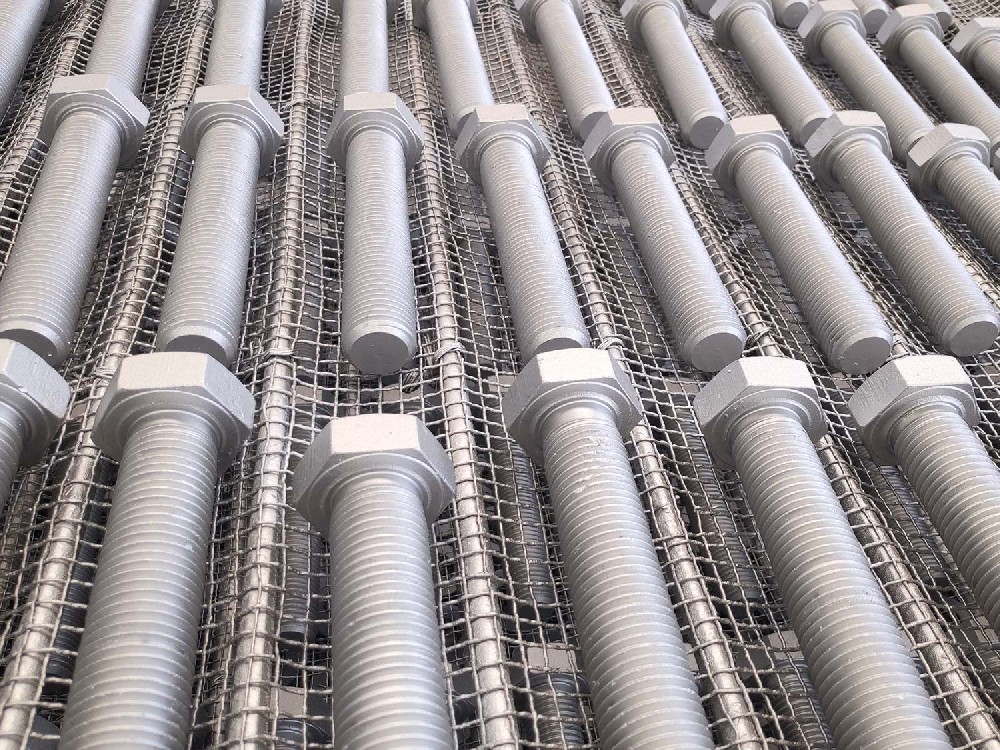
1000-hour salt spray test, zero emissions of hexavalent chromium, and a 40% reduction in total life-cycle costs—this technology is rewriting the industry rules for fastener corrosion protection.
Fasteners are hailed as the "rice of industry." A screw or a nut, seemingly insignificant, carries the lifeline of critical equipment such as automobiles, wind power plants, and bridges. However, the "invisible killer" of fasteners—corrosion—causes trillions of dollars in economic losses globally each year.
Traditional fastener corrosion protection has long relied on processes such as electroplating zinc and early Dacromet coating. But electroplating carries the risk of hydrogen embrittlement, and early Dacromet contains carcinogenic hexavalent chromium—environmental protection and performance always seem to be mutually exclusive.
Now, the mature application of environmentally friendly Dacromet coating technology is breaking this dilemma. It uses water instead of organic solvents and chromium-free coatings instead of chromium-containing ones, achieving top-level corrosion protection performance while achieving a win-win situation for both environmental protection and the economy.
Technology Decoding: Why can environmentally friendly Dacromet coating achieve such significant results with minimal investment? The secret to the environmentally friendly Dacromet coating's ability to achieve over 1000 hours of salt spray corrosion resistance with a thickness of only 8-12 micrometers (approximately one-fifth the diameter of a human hair) lies in its unique "armor-like" structural design.
Layer upon layer of flakes create a "maze effect"
The core components of the coating are flake-shaped zinc and aluminum powders. During coating and curing, these micron-sized metal flakes stack and arrange themselves parallel to each other on the substrate surface like tiles. This structure forms a physical shielding layer, significantly extending the path of corrosive media such as water, oxygen, and chloride ions to penetrate the metal substrate.
Sacrificial anode, electrochemical protection
Zinc is chemically more reactive than iron. When corrosive media overcomes the physical barrier and comes into contact with the coating, the zinc powder acts as a "sacrificial anode," preferentially undergoing an oxidation reaction, thus protecting the steel substrate acting as the cathode. Studies have shown that the self-corrosion potential of the environmentally friendly Dacromet coating (-1.043 V) is much lower than that of bare Q235 steel (-0.645 V), providing effective cathodic protection for the substrate.
Passivation and Self-Healing
Special additives in the coating form a dense passivation film on the surface of the zinc-aluminum powder. Even with minor scratches, this passivation film can inhibit the spread of corrosion to a certain extent.
Environmental Revolution: From "Major Polluter" to "Green Pioneer"
While traditional Dacromet coatings offer good corrosion resistance, the hexavalent chromium (Cr6+) in the coating solution is a recognized carcinogen, severely polluting the environment and endangering the health of workers. With the implementation of EU environmental directives such as ELV and RoHS, chromium-containing coating products have been banned from the market.
Environmentally friendly Dacromet coatings achieve two major breakthroughs:
Chromium-free, eliminating pollution at the source
Environmentally friendly Dacromet coatings use inorganic materials such as high-modulus potassium silicate solution to replace traditional chromic anhydride as a binder, completely eliminating the addition of chromates and achieving zero emissions of hexavalent chromium. It contains no sodium nitrite and no toxic metals such as nickel, lead, or barium, meeting the most stringent environmental regulations globally.
Water-based, near-zero VOC emissions
Traditional solvent-based coatings contain large amounts of volatile organic compounds (VOCs). Environmentally friendly Dacromet coatings use water as the dispersion medium, releasing only water vapor during the coating process, making them more friendly to workers and the environment. No water washing required, zero emissions, and no waste treatment, truly achieving clean production.
Performance Advancement: More than just environmentally friendly, surpassing tradition
If environmental protection was a "compromise" for previous new technologies, then with environmentally friendly Dacromet coatings, it's a "bonus"—its overall performance surpasses traditional processes.
No hydrogen embrittlement, protecting the safety of high-strength fasteners
High-strength bolts (grade 10.9 and above) are most vulnerable to hydrogen embrittlement—the pickling and electrochemical reactions during electroplating cause hydrogen atoms to penetrate the metal lattice, leading to sudden fracture under stress without warning. Environmentally friendly Dacromet coatings use a non-electrolytic coating process, with no acid treatment throughout, completely eliminating the risk of hydrogen embrittlement. This is crucial for fasteners critical to safety, such as those used in automotive chassis and wind turbine towers.
High Temperature Resistance, Adaptable to Harsh Working Conditions
The inorganic coating system endows the environmentally friendly Dacromet coating with excellent heat resistance. Traditional electroplating layers oxidize and fail at high temperatures, while the environmentally friendly Dacromet coating can withstand higher operating temperatures, making it suitable for high-temperature environments such as those around engines.
Precisely Controllable Coefficient of Friction, Meeting Stringent Automotive Assembly Standards
Modern automotive assembly has achieved automated tightening, placing extremely high demands on the stability of the friction coefficient of fasteners (e.g., the German VDA standard requires a screw friction coefficient in the range of 0.09-0.16). The environmentally friendly Dacromet coating can precisely control the coefficient of friction within the target range by adjusting the formula or adding a topcoat over the primer, ensuring that every screw is "tightly tightened and locked" on the automated assembly line.
Process Adaptability: Flexible Coating, Efficient Production
The environmentally friendly Dacromet coating has good process adaptability, allowing for flexible selection of coating methods based on fastener specifications and production volume:
Dip Coating + Centrifugal Drying: Suitable for large-volume production of small parts such as bolts and nuts. After the workpiece is placed in a basket, it is immersed in the coating solution, and then excess coating solution is removed by high-speed centrifugation, resulting in a uniform coating and high material utilization.
Spraying: Suitable for stamped parts, irregularly shaped parts, etc. Robotic automatic spraying allows for precise control, with a positioning accuracy of ±0.1mm and a material utilization rate of ≥95%.
Drying and curing: Typically employs a "two-coat, two-bake" process—pre-baking (approximately 80℃) after coating to evaporate moisture, followed by high-temperature curing (approximately 280℃) to fully cross-link the coating into a film.
Economic Analysis: The Balance Between Short-Term Costs and Long-Term Value
While the shift to environmentally friendly Dacromet coating may appear to have a higher unit price than traditional electroplating, a thorough calculation of the "total life cycle cost" reveals the answer:
High Material Utilization: Dip-spinning and intelligent spraying processes significantly reduce paint waste.
Reduced Overall Costs: In a case study by a car manufacturer, approximately 4,000 environmentally friendly Dacromet-coated screws were used per vehicle, resulting in a 40% reduction in total life cycle cost and a decrease in CO₂ emissions of 1.2 tons.
Avoiding Quality Losses: Completely eliminates the risk of hydrogen embrittlement, improves first-pass yield, and reduces after-sales claims.
For fastener manufacturers, environmentally friendly Dacromet coating is no longer a matter of "whether to do it," but a matter of "when to do it."
The rise of environmentally friendly Dacromet coating is not a breakthrough in a single technology, but an inevitable result of the combined forces of materials science, environmental regulations, and industrial demand.
It provides top-tier protection with its flake-like zinc-aluminum "armor" structure, fulfills its environmental commitment with a chromium-free water-based formula, and meets the stringent standards of high-end manufacturing with its hydrogen-free embrittlement-free and controllable coefficient of friction. From Volkswagen in Germany to Ford in the United States, from automobile chassis to wind turbine towers, this technology is rapidly replacing traditional processes globally.
Environmental protection is not about cost, but another expression of efficiency; green is not a constraint, but a new height of competitiveness.
This is precisely the "win-win" answer that environmentally friendly Dacromet coating brings to fastener corrosion protection.