


Author: Site Editor Publish Time: 2026-10-17
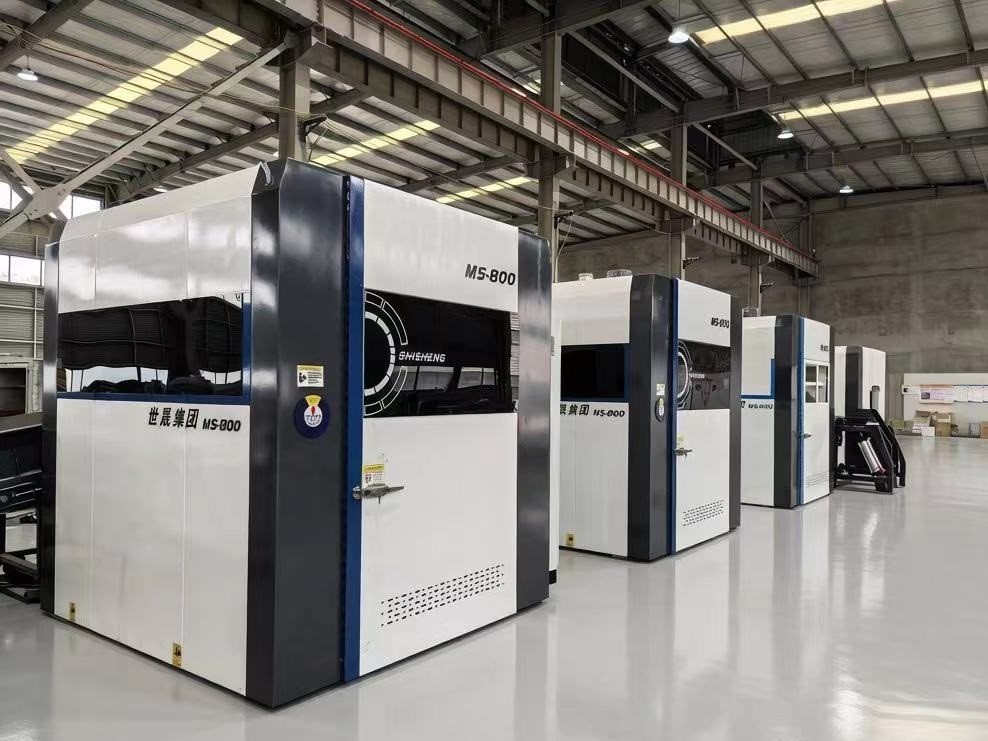
Many clients inquiring about Dacromet coating production lines start the conversation with: "I need a line with a daily capacity of [X] tons—give me a quote."
With years of deep experience in Dacromet coating equipment—serving clients across sectors like automotive, wind power, rail transit, and construction machinery—Shisheng Group has seen many projects run into trouble. Clients often focus solely on production capacity during the selection process, only to realize after purchase that the equipment cannot produce high-quality parts. In such cases, high capacity becomes meaningless.
Today, let’s clarify: when purchasing Dacromet coating equipment, should you prioritize the workpieces or the production capacity?
**Define the workpiece process first, then match the capacity.**
The workpiece determines *whether* the equipment can process the parts, while the capacity determines *how fast* it can do so. The workpiece is the fundamental prerequisite, and capacity is the subsequent outcome—this order cannot be reversed.
**Workpieces dictate the core configuration of the production line.**
A Dacromet coating line is not a "universal" solution. The shape, specifications, and structure of the workpieces directly dictate the type of main processing unit, the design of the baskets, the tilt angles, the centrifugation parameters, and the settings for the mesh-belt furnace.
➤ For standard bolts, nuts, and washers: Challenges often include threads and blind hex-socket holes, where liquid pooling or uneven coating thickness on threads are common issues. Shisheng Group’s MS800 and SX800 series—featuring tiltable, robotic-assisted dip-spin units—allow for multi-angle centrifugal processing. This eliminates liquid pooling in blind holes and ensures uniform coating on threads, meeting the stringent salt-spray resistance and friction coefficient requirements for high-strength fasteners used in the automotive and wind power industries.
➤ For complex stamped parts, springs, or thin-walled components: Since these parts are prone to tangling, mechanical damage, or deformation, the basket design, loading method, lifting speed, and centrifugation profile must be custom-tailored.
➤ For large-scale power fittings or structural steel components: The dip-spin process is unsuitable; instead, a suspension-based spraying system or a dip-immersion solution should be selected.
➤ The coating system must also be determined in conjunction with the workpiece: Will it be traditional chromium-based Dacromet, or a chromium-free zinc-aluminum coating (such as Geomet®)? The two types of processes have different requirements for coating circulation, temperature control, and curing profiles. The specific coating required for a workpiece determines whether the production line must be compatible with a chromium-free system.
Even if the nominal capacity is "one ton," the equipment required for processing M10 bolts differs entirely from that needed for complex-shaped stamped parts. Discussing capacity without first considering the specific workpiece often leads to issues such as liquid pooling, incomplete coating, mechanical damage (dents/nicks), and inconsistent film thickness—all of which prevent achieving a high yield rate.
Capacity is a secondary metric that can only be determined once the workpiece and its specific processing requirements are defined.
Capacity can only be calculated accurately after the process plan, coating method, basket load weight, and dip-spin cycle time have been established. For instance, the standard cycle time for a complete dip-spin process on Shisheng Group’s fully automated MS800 Dacromet coating line is 3 minutes and 30 seconds—a figure calculated based on standard fasteners. If the line is used for complex-shaped parts prone to tangling, the load capacity per batch will decrease, and the actual throughput will drop accordingly; one cannot simply apply a theoretical capacity figure to all scenarios.
When selecting equipment based on capacity, it is essential to distinguish between two concepts:
1. Theoretical Capacity: The maximum processing volume when the equipment operates at full load with ideal workpiece conditions.
2. Effective Capacity: The actual, stable output of the facility, accounting for factors such as product changeovers, rework, equipment maintenance, and loading/unloading.
Many clients focus solely on theoretical capacity, overlooking the losses incurred during product changeovers, only to find after commissioning that the actual output falls short of expectations. During the design phase, Shisheng Group engineers calculate the effective capacity based on the client’s specific workpieces, rather than providing a quote based merely on tonnage.
Shisheng’s Standard Equipment Selection Process for Clients:
1. Information Gathering: Collect details on the workpiece—product type, dimensions, weight, presence of blind holes or threads, and material—while clarifying technical specifications such as salt spray resistance, film thickness, and friction coefficient, as well as whether a chromium-based or chromium-free zinc-aluminum coating is required.
2. Sample Testing: Process the client’s workpieces to verify coating quality. This step checks for risks such as liquid pooling, mechanical damage, or film delamination, and is used to finalize the equipment model, centrifugal parameters, and basket configuration. 3. Production Capacity Calculation: Based on the load capacity per basket, the cycle time for the dip-spin process, and the requirements for a "two-coat, two-bake" sequence, calculate the hourly and daily production capacity. Use these figures to determine the appropriate specifications for the mesh-belt curing furnace, pre-treatment system, and environmental protection (emissions control) system.
4. Provision of a Complete Turnkey Solution: This includes the robotic dip-spin unit, mesh-belt sintering furnace, temperature-controlled coating recovery system, exhaust gas treatment system, automated loading/unloading mechanisms, and a central control system.
In short: If the test samples fail to meet specifications, high production capacity is meaningless.

Pitfall Warnings:
1. Do not rely solely on "daily processing capacity (in tons)" when comparing prices. A lower price per ton from a supplier may be misleading if the core equipment is ill-suited for your specific workpieces; the resulting need for rework, excessive coating consumption, and high scrap rates will quickly erode all your profits.
2. For clients using chrome-free zinc-aluminum coatings, ensure equipment compatibility during the selection phase—retrofitting systems later is prohibitively expensive.
3. Do not treat environmental compliance as an afterthought. Integrate exhaust gas treatment systems directly into the production line design and coordinate with environmental impact assessment (EIA) requirements well in advance.
A Dacromet coating line is a specialized process system, not a standardized, off-the-shelf machine. As a comprehensive provider of Dacromet solutions, Shisheng Group—from the core MS800 fully automated coating unit to the delivery of the complete production line—prioritizes the specific nature of your workpieces and the underlying coating process. By first solving the technical challenges of coating your specific parts and then aligning the system with your required capacity, we ensure that once production begins, you achieve consistent product quality, trouble-free operation, and reliable, sustained output.
If you are planning to build a new Dacromet coating line or upgrade an existing one, please contact Shisheng Group. You can send us sample workpieces for testing, and we will develop a customized solution tailored to your needs.
